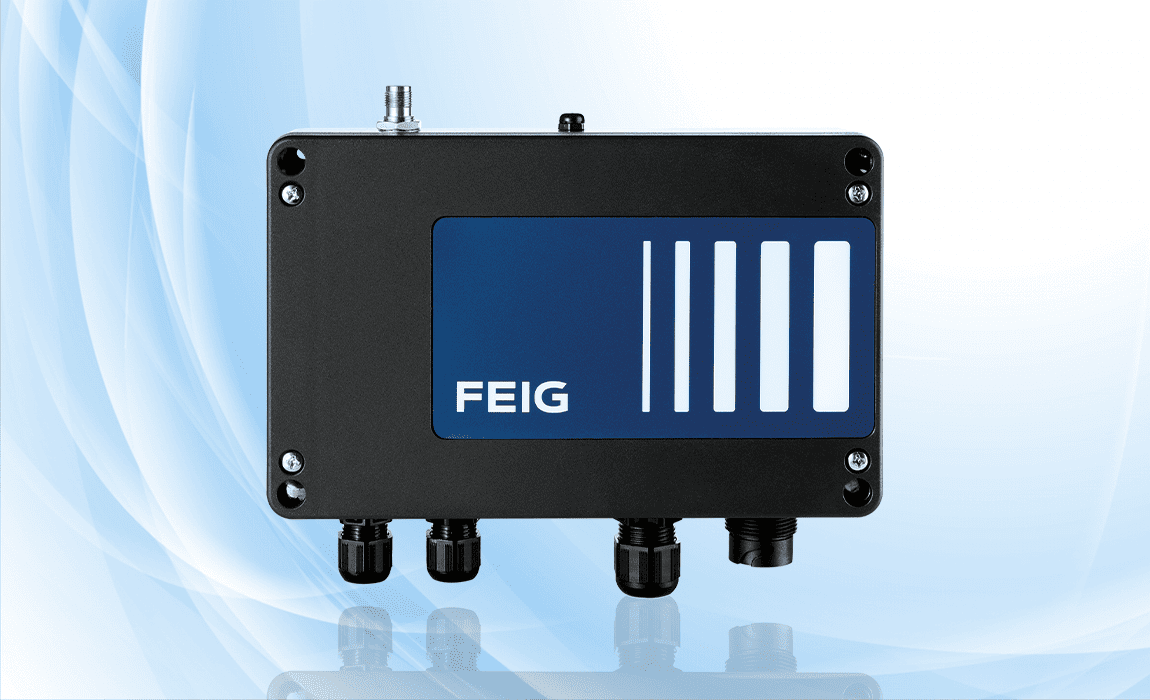




Since the 19th century, public transport has benefited from trams and subways. In the world’s metropolises, a well-developed local transport network offers an efficient and environmentally friendly alternative to the car. Some tram lines have been in operation for a very long time, and older vehicles often run alongside newer lines. Retrofitting modern signaling systems is often very complex and costly, and drivers often still have to identify signals along the route visually. Modern UHF RFID sensors can transmit existing signal information to vehicles reliably, with low maintenance and cost-effectiveness. Retrofitting existing lines is therefore possible with little effort.
Signal systems are essential for frictionless street and subway line operations. Wherever signals still need to be visually recognized by the vehicle driver as they pass, there is potential for optimization. Thanks to digitalization, these signals can be automatically transmitted to the vehicle, making visual recognition secondary.
RFID technology replaces costly retrofitting
Retrofitting and modernizing existing signaling systems is often complex and costly. A relatively simple, yet reliable, and low-maintenance solution is based on UHF RFID technology. Battery-free radio sensors (UHF RFID sensor transponders), which are installed in the trackbed or road, monitor the switching status of the existing, conventional signaling systems. The sensors are connected to the existing signaling system via a sensor cable. Since the sensor cable can be several hundred meters long, the sensor transponder itself does not have to be installed directly next to the signal on the track, but can transmit the switching status to the vehicle several meters in advance.
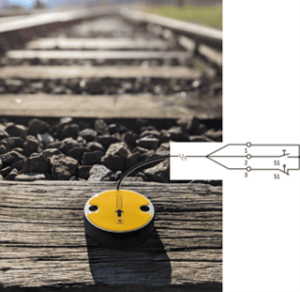
Robust, passive UHF RFID sensor transponder from smart-TEC (Source: smart-TEC GmbH)
To read the sensor transponder, the vehicles must be equipped with a UHF RFID reader. This reader recognizes the sensor transponder and transmits a unique ID as well as the sensor status, i.e., the information from the signaling system. For example, a stop signal can be transmitted to the vehicle via radio signals immediately upon driving over the sensor transponder. The RFID reader, which receives the signal via the antenna installed underneath the vehicle, can transmit this information to the vehicle control system via TCP/IP, UDP telegram, or serial. Alternatively, a signal lamp or horn installed in the vehicle can be activated to alert the driver to the currently present signal. The existing vehicle control system does not require any modifications. Thanks to the robust and battery-free sensor transponders, this solution requires virtually no maintenance. The reliable RFID readers and antennas from FEIG ELECTRONIC, which are installed in or underneath the vehicle, meet all applicable type tests according to EN 50155.
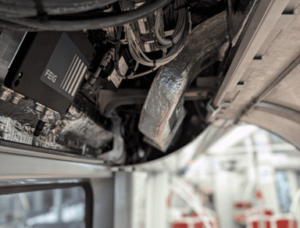
FEIG RFID reader ID LRU4000X installed in the vehicle (source: FEIG)
This solution is not proprietary, but is based on the ISO 18000-63 standard. Robust UHF RFID readers from FEIG, specifically designed for the railway market, have been in use in comparable applications since 2012. Whether on open track or in maintenance centers, where previously only line-of-sight traffic was possible and completely without modern signaling systems, FEIG’s RFID technology has been successfully and reliably tested for many years. Internationally, whether in Ankara, Hong Kong, or the Swiss Alps, operators rely on FEIG RFID solutions.
RFID technology also detects, for example, switch positions
In addition to traditional signal detection, sensor transponders combined with FEIG RFID products can also be used for other applications. In China, this technology is also used to detect switch positions in monorail applications and transmit them to the vehicle at an early stage.
Furthermore, by capturing the transponder’s unique ID, location information can also be linked. If an ID is linked to a location, a coordinate, the ID can also be used to directly determine the exact position of the vehicle, track-accurate, in all weather conditions, and even in tunnels. This is how passenger information systems, for example, are supplied with position data.
FEIG’s RFID products have been used in a variety of applications in the railway environment for more than 10 years. Further application ideas and product information can be found https://www.feig-electronics.com/railway.